How it works For Teams Retreats Contact Gabriel
EN · FR
Cultivating Emotional Balance · Chamonix

Two days on emotional balance. Free, because it is our exam.

Edgar Lattuada and I have both completed the CEB teacher training. The last step is to teach a full 12-hour course and send the CEB faculty one hour of footage of each of us teaching. For that we need a room of real people. Twelve at most.

Sat 12 & Sun 13 December 2026 · Chamonix · 12 places
Taught in English Reserve a place
Two kinds of happiness

We use one word, happiness, for two different things. One is the joy we pursue: a summit, a good meal, praise, a message from the right person. It is real, and it ends when the thing ends. So we go looking for the next one.

The other is the wellbeing we cultivate. It depends much less on what the day brings, and it shows in how we meet a bad forecast, a difficult client, our own fear or anger. The first we chase. The second we can train, and our emotions, the enjoyable and the regrettable, are the material we train with.

That is what Cultivating Emotional Balance teaches, and what these two days are about.

01
Short lectures

How emotions work.

What an emotion is, and how we can observe it, including the psychological and physiological changes during an emotional episode. Why practice matters so much, and how the four balances and the two kinds of happiness fit into all of it.

  • Emotion science, made usable. The course draws on decades of research into emotion, brought down to what you can notice in your own day.
  • Awareness brings choice. Balance does not mean feeling less or being calm all the time. It means an emotion arises, we know it is here, and we have a choice about what happens next.
02
Dyads and small groups

Where the ideas meet your own life.

Structured exercises in pairs and small groups. In pairs, one person speaks, one listens, then you swap. Simple, and often the part people remember most.

  • Listening without fixing. The listener does not advise or interpret. You get to hear yourself think.
  • You choose what to share. Nothing personal is required, and what is said in a pair stays in the pair.
03
Guided contemplations

Training intention, attention and insight.

Sitting practices we lead in the room: settling body, speech and mind, clarifying intention, steadying attention, and cultivating loving-kindness.

  • No experience needed. A chair is fine. Nobody has to sit on the floor.
  • Secular. CEB was built to be used by anyone, with no religion attached.
Where CEB comes from

In March 2000, scientists and Buddhist scholars met the Dalai Lama in Dharamsala to talk about destructive emotions. At the end he asked for something practical: a training anyone could use, with no religion attached. The psychologist Paul Ekman and the contemplative scholar B. Alan Wallace developed it, with Eve Ekman. Its aim is in its name: not fewer emotions, not permanent calm, but living with all of them in a way that supports our own wellbeing and other people's. cultivating-emotional-balance.org

The weekend

Twelve hours over two days.

Saturday and Sunday, 9:00–12:00 and 14:00–17:00, with a five-minute break every hour and two hours for lunch. Every session opens with the same meditation, settling body, speech and mind in their natural state, and ends with a guided practice that builds from one session to the next. In between, we mix short lectures, work in pairs and in small groups.

Saturday 12 December
9:00
Foundations
An introduction to Cultivating Emotional Balance and its history. Two kinds of happiness: the joy we pursue and the wellbeing we cultivate. Closing practice: intention and motivation.
12:00
Lunch in town. Eat alone or with others, as you prefer.
14:00
What an emotion is
What an emotion is, and how an emotional episode unfolds: the trigger, the appraisal, the changes in body and mind, and the moment where choice is possible. The universal emotions. Practice in small groups, working with one emotion. Closing practice: a first introduction to stabilising the mind.
Sunday 13 December
9:00
The four balances
Conative, attentional, cognitive and emotional balance: what each one is, and how they support each other. Closing practice: shamatha, calm abiding.
12:00
Lunch in town, alone or together.
14:00
Working with emotions
The refractory period, when an emotion keeps us from seeing what does not fit it. Ways to change course, including reappraisal, and antidotes to specific emotions, such as loving-kindness for anger. We close the course with a guided practice of loving-kindness.

This is education, not therapy. The shape holds; the details adjust to the group.

Free, with three asks

What we ask in return.

The teaching is free. Your presence is what makes this a real course, and that is the part we cannot do without.

Both days
Come for the whole course.
The evaluation needs the same group on Saturday and Sunday, so we can only offer places to people who can attend all twelve hours.
The camera
Be comfortable with a camera in the room for part of the time.
We film about one hour of each of us teaching, not the whole twelve. The camera points at us, and the footage goes to the CEB faculty for evaluation and is used for nothing else. We tell you beforehand which sessions are filmed. You sign a consent form before we start, and if you prefer to sit out of frame, we arrange the room that way.
Cost share
Share the room and refreshments.
Room, tea, coffee and healthy snacks for two days come to around €420. Divided by fourteen, that is about €30 each, [paid in advance to confirm your place]. We take nothing.
Is it for you?

Who it suits, and who it does not.

It will probably suit you if

  • You lead, teach, guide, manage or care for other people.
  • You have noticed that getting what you wanted did not make you steadier.
  • You are curious about meditation and want to know why it works.
  • You can give two full days.

It probably will not if

  • You can only come for one day. We need the group whole on both.
  • You are looking for therapy or support in a crisis. This is education, and we would rather point you to the right help.
  • You do not want to be in a room with a camera, even for part of the course.
Your teachers

Two people who very much want to do this well.
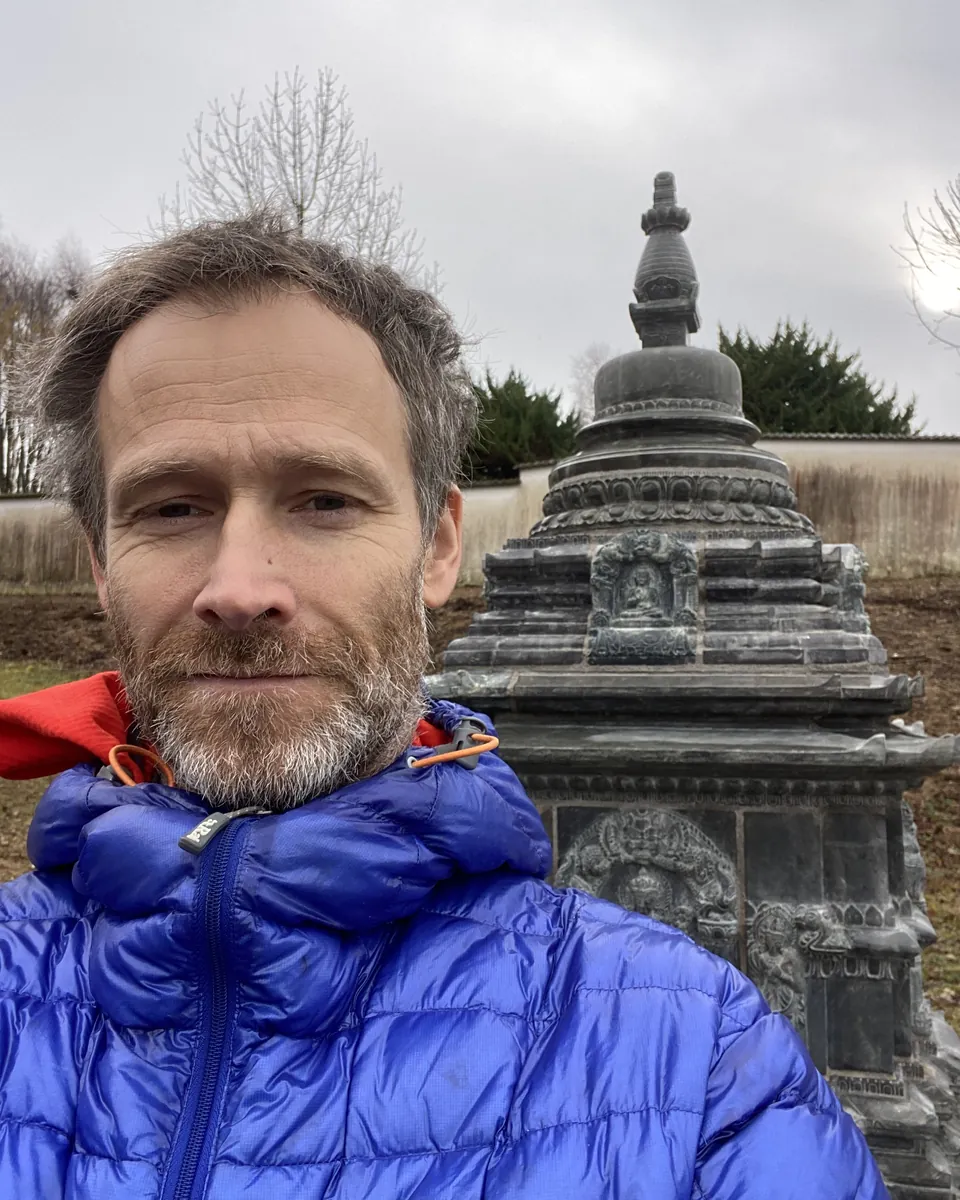
Gabriel Mazur beside a stupa
Gabriel Mazur
CEB teacher trainee · IFMGA mountain guide

Chamonix has been my home since 2011. Before the mountains, I spent nine years in a Tibetan Buddhist hermitage in France, including a traditional three-year retreat. Enjoying working directly with people, I then spent four years in the mental health field, and later worked as an IFMGA mountain guide.

I now give courses on emotional awareness and run operations for expeditions in the Alps and the Himalaya. More about me
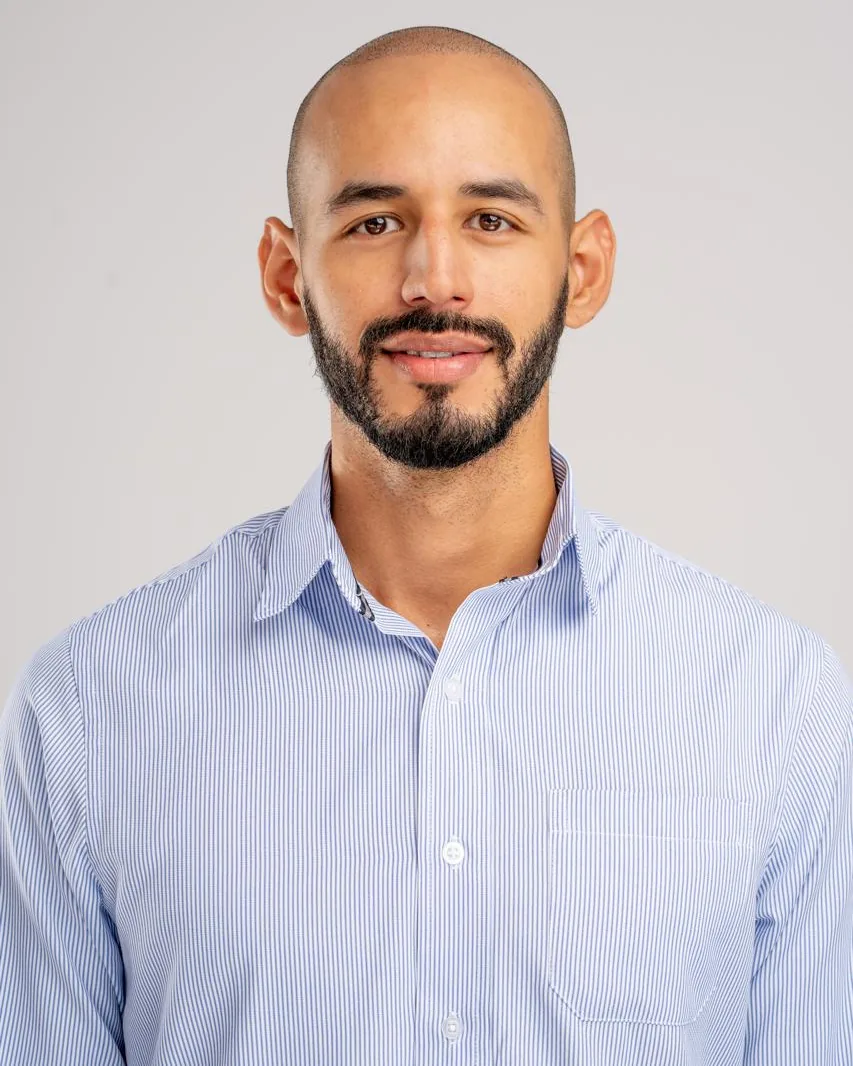
Edgar Lattuada
Edgar Lattuada
CEB teacher trainee · Customer experience professional

I'm based in Mexico City, where I lead customer experience projects and human-centred solutions for multinational companies.

Alongside my corporate work, I’ve spent over a decade studying yoga and meditation globally and serving on the board of a Tibetan Buddhist centre.

I came to CEB to bridge these worlds, bringing my background in organisational transformation, emotional awareness, and conscious leadership. LinkedIn · Instagram

Dates
Saturday 12 & Sunday 13 December 2026
Hours
9:00–12:00 · 14:00–17:00, both days
Place
Central Chamonix
Language
English
Group
12 places · sign-ups close Sunday 6 December
Cost
Free teaching · about €30 towards room & refreshments
Questions

Before you decide.

Do I need any experience of meditation?

No. Everything is explained from the beginning, and you can sit on a chair the whole time.

Will I be on film?

Very little, if at all. We film about one hour of each of us teaching, so roughly two of the twelve hours. The camera points at us, the teachers; you may be heard, or seen at the edge of the frame. The footage goes only to the CEB faculty for evaluation. You sign a consent form before we start, and if you would rather stay out of frame, we arrange the seating that way.

Why is it in English?

Because the footage is assessed by the CEB faculty, who work in English. You will need enough English to follow short talks and talk with a partner.

Can I come for just one day?

Not this time, sorry. The course is assessed as a whole, so we need the same group on both days. If one day is all you have, join the list for the next course.

What does it cost, and how do I pay?

The teaching is free. We ask about €30 each towards the room and refreshments, [paid by bank transfer when we confirm your place]. We take nothing.

Is this therapy?

No. CEB is education: understanding how emotions work and practising ways of working with them. If you are going through a crisis, we would rather help you find the right support.

What should I bring?

Warm socks and a notebook. Lunch is in town, so there's nothing to bring for it. Tea and coffee are covered.

What if the course is full?

Sign up anyway. You go on the waitlist, and you are the first to hear about the next course.

Sign up

Reserve a place.

Twelve places, first come. Sign-ups close on Sunday 6 December. We will confirm by email with the practical details. If the course is full, you go on the waitlist and hear first about the next one.

Your details are used only to organise this course and reply to you. Privacy

Questions first? Write to us through the contact page.